

DOI码:10.1016/j.aap.2025.108311
发表刊物:Accident Analysis and Prevention
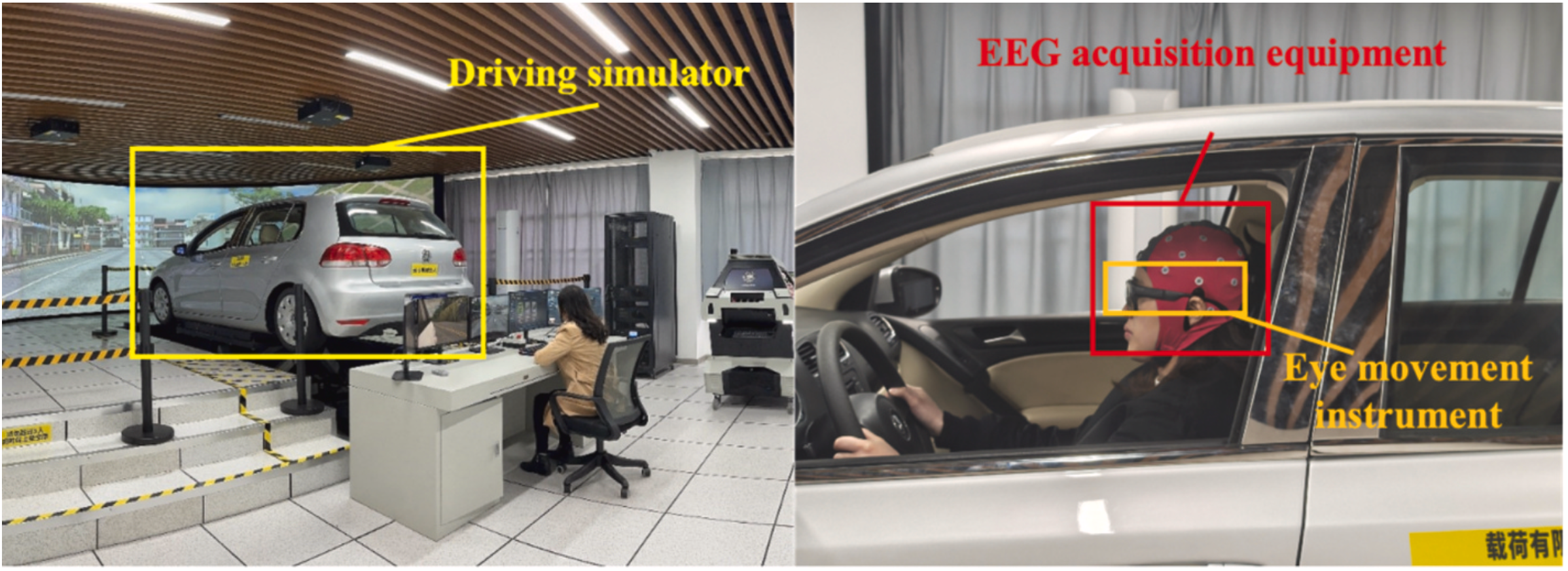
关键字:Driver fatigue poses a critical threat to global road safety, particularly among young drivers. Nevertheless, policy-level interventions remain fragmented due to the lack of reliable and deployable detection technologies. Bridging this gap requires accurate, interpretable, and real-time fatigue monitoring systems capable of informing practical decision-making in transportation safety management. To address this challenge, we propose an end-to-end EEG-based fatigue detection model, Scale-Enhanced Transformer and Dynamic Graph Convolutional Network (SET-DGCN). The model captures multi-scale temporal dependencies and spatial brain-region interactions by integrating convolutional embeddings, attention mechanisms, and learnable graph structures. Extensive evaluations on both a driving simulation dataset and the publicly available SEED-VIG dataset confirm that SET-DGCN outperforms mainstream convolutional neural network (CNN)-based, graph convolutional network (GCN)-based, and Transformer-based models in terms of accuracy and F1-score, while maintaining strong cross-subject generalization. To enhance both interpretability and application relevance, a component-level attribution method (COAR) is employed to evaluate the functional contribution of model modules, while SHapley Additive exPlanations (SHAP) analysis is used to uncover brain region-specific patterns across fatigue stages. Based on these neural insights, a set of multi-level policy and design recommendations is proposed, ranging from infrastructure enhancements to adaptive in-vehicle systems and individualized interventions, to provide a comprehensive framework for mitigating fatigue among young drivers in real-world transportation contexts.
论文类型:期刊论文
论文编号:108311
卷号:225
是否译文:否
发表时间:2025-11-14
收录刊物:SCI
发布期刊链接:https://www.sciencedirect.com/science/article/pii/S0001457525003999
 报考该导师研究生的方式