

DOI码:10.1016/j.jtrangeo.2025.104470
发表刊物:Journal of Transport Geography
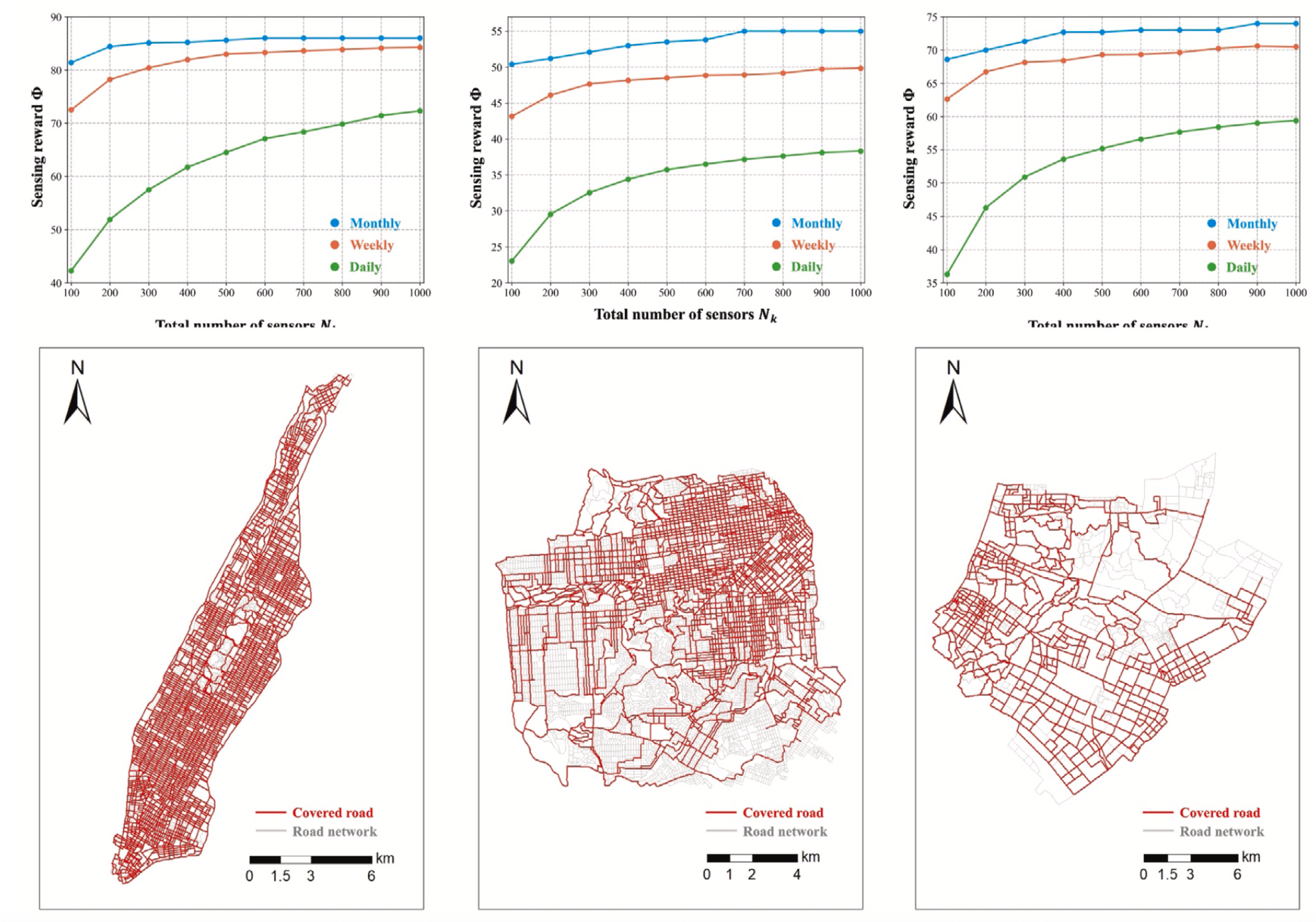
摘要:The development of smart cities demands cost-effective sensing solutions for community-level urban diagnostics. Bike-sharing systems could serve as an ideal mobile sensing platform due to their unparalleled ability to access fine-grained urban capillaries at street level, combining both physical and direct observability of built structures. This study represents the first systematic effort to explore the potential of shared bikes as a novel mobile sensing platform. Moving beyond the limitations of existing research, which predominantly focuses on post-collection data analysis while overlooking data acquisition optimization, we propose an integrated simulation–optimization framework. This framework simultaneously minimizes fleet size, optimizes daily rebalancing operations, and generates complete monthly trajectory data. Furthermore, we develop a day-to-day optimization model for deploying sensor-equipped bikes, which co-determines initial allocation and daily dispatch strategies under budget constraints. A simulation-based case study in Manhattan demonstrates that the proposed strategy improves the sensing reward by 4%–8% compared to random deployment. At a monthly interval, only 100 shared bikes (approximately 1% of the fleet) are needed to cover 81% of road segments. Transferability analyses conducted in San Francisco and Longquanyi District, Chengdu, reveal that sensing performance is largely influenced by local cycling patterns. This research offers a conceptually innovative, low-cost, and scalable sensing solution for fine-grained urban management.
论文类型:期刊论文
论文编号:104470
卷号:130
是否译文:否
发表时间:2025-10-31
收录刊物:SCI
发布期刊链接:https://www.sciencedirect.com/science/article/pii/S0966692325003618
 报考该导师研究生的方式